Politics
JD Vance mocked after mixing up world war history while defending trump’s ukraine plan

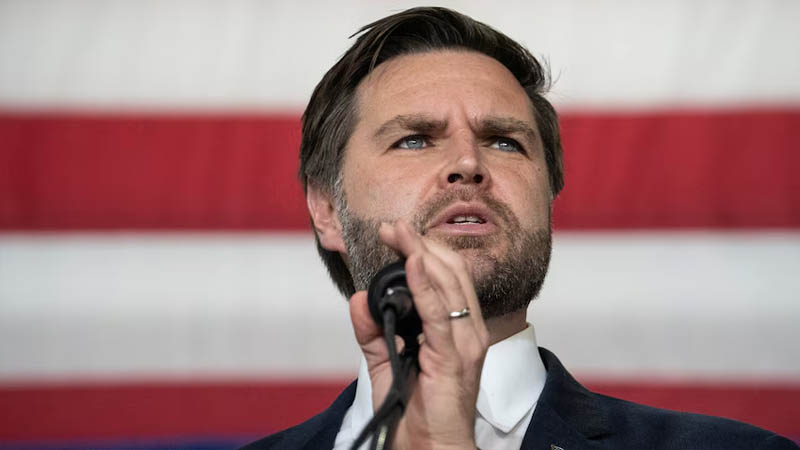
JD Vance is taking heat after bungling a bit of history while trying to defend Donald Trump’s new approach to ending the war in Ukraine.
On NBC’s Meet the Press Sunday, the vice president made the case for Trump’s shift towards negotiating with Russia instead of sticking with sanctions and tough ultimatums. He argued that the best way to end big conflicts is through compromise. To back up the point, he pointed to the two world wars.
“If you go back to World War II, if you go back to World War I. If you go back to every major conflict in human history, they all end with some kind of negotiation,” Vance said. He served as a Marine combat correspondent, but his history lesson quickly fell apart.
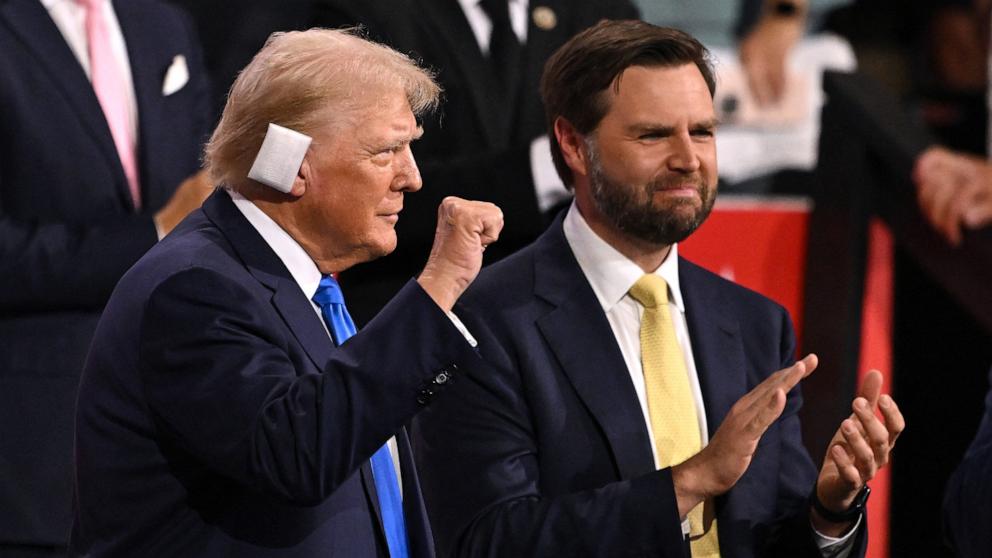
World War II did not end at a negotiation table. It ended with Germany’s unconditional surrender in May 1945 and Japan’s in September after the bombings of Hiroshima and Nagasaki.
Critics on social media piled on. “Vance says WWII ended in negotiation – someone tell that to Hiroshima,” one user wrote. Another posted, “World War 2 ended with the exact opposite of a negotiation.”
During the interview, Kristen Welker pressed Vance on whether Trump’s plan means Ukraine would be forced to give up land Russia has illegally seized. President Volodymyr Zelensky has repeatedly said that is not an option.
Vance dodged the question at first, saying only that Ukrainians would decide for themselves where the borders should be drawn. He later added that “middle ground” is usually how wars get settled and described America’s new role as a mediator, not an enforcer.
“If Ukrainians are willing to say something on territory that brings the conflict to a close, we’re not going to stop them. We’re also not going to force them, because it’s not our country,” Vance said.
His office did not immediately respond to requests for comment.
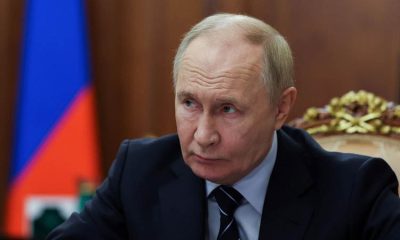
The shift in tone is significant. Just days before, Trump had talked tough about Vladimir Putin. When the two met in Alaska on 15 August, Trump warned the Russian president of “severe consequences” if he refused to end the fighting. But he walked away without securing a ceasefire.
Now, the message from his team is different. Instead of demanding surrender, Vance suggested compromise could be the only realistic outcome. That nuance might make diplomatic sense, but the clumsy history reference has overshadowed the argument.
For critics, it was more than a slip-up. It hinted at a willingness to gloss over uncomfortable facts in order to justify pressuring Ukraine into concessions. For supporters, it was a reminder of how complicated and drawn out peace talks can be, even if the comparisons Vance used were wrong.
The bigger question is whether Ukrainians would accept such a deal. Zelensky has shown no sign of giving up territory, and with Russian forces still holding parts of eastern Ukraine, the idea of “middle ground” sounds more like a loss than a settlement.
For now, the focus is less on Trump’s negotiating strategy and more on Vance’s history blunder. It gave opponents easy ammunition and turned what could have been a serious policy pitch into an online punchline.