Health
Scientists in the UK discover sugar coated nanoparticle that could stop covid in its tracks

Experts searching for what they call a “Final Boss” drug to completely block COVID infections believe they may be close to something big. A Swansea University academic has led research that uncovered a synthetic nanoparticle which can stop the virus from infecting human cells, reports the Mirror.
The new particle, known as Glycolyze, is a sugar-coated polymer nanoparticle designed to mimic natural sugars found on human cells. Unlike vaccines, which work by triggering an immune response, this molecule acts like a physical shield. It prevents the virus’s spike protein from attaching to real cells, effectively blocking the first step of infection.
The particle mimics sugars called polysialosides, which are made from repeating units of sialic acid. These are often the structures viruses latch onto to start an infection. By copying this natural target, Glycolyze tricks the virus, acting as a decoy and binding to the dangerous spike protein before it can cause harm, reported the Daily Star.
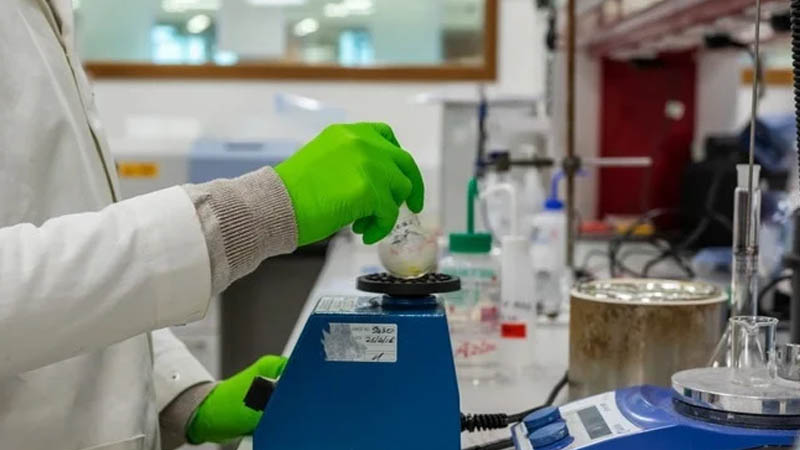
Researchers used advanced lab techniques to test how the molecule interacts with the virus. When applied to human lung cells, infection rates fell by a staggering 98.6 percent. They also found Glycolyze binds to COVID around 500 times more strongly than a similar compound that contains sulphates but no sugars, reported News Medical.
Even more promising, the compound worked effectively at lower doses and was able to reduce infection not just in the original strain of SARS-CoV-2 but also in the highly infectious D614G variant.
Dr Sumati Bhatia, Senior Lecturer in Chemistry at Swansea University and lead author of the research, said: “Leading this research, alongside our international partners, has been incredibly rewarding.
It opens a new direction for using glycolyzes as a therapeutic strategy against SARS-CoV-2 and could lay the foundation for a new class of antiviral therapies to protect those most at risk.”
The team is now preparing for further biological testing in secure labs to see how well the molecule works against multiple virus strains. If successful, this discovery could pave the way for new treatments such as antiviral nasal sprays, disinfectant surfaces, and other protective methods to help combat future outbreaks.
The news comes as the UK faces another rise in infections with a new strain known as Nimbus. Official UK Health Security Agency data shows that 8 percent of current tests are now positive for Nimbus, which has rapidly become the country’s most common variant. Infections are believed to have doubled in the past month.
This breakthrough from Swansea could not have come at a better time, offering hope that science may soon deliver a new line of defence just as the virus continues to evolve.